Cerakey Ceramic Keycaps vs POM Jelly Profiles: Acoustic Depth Compared
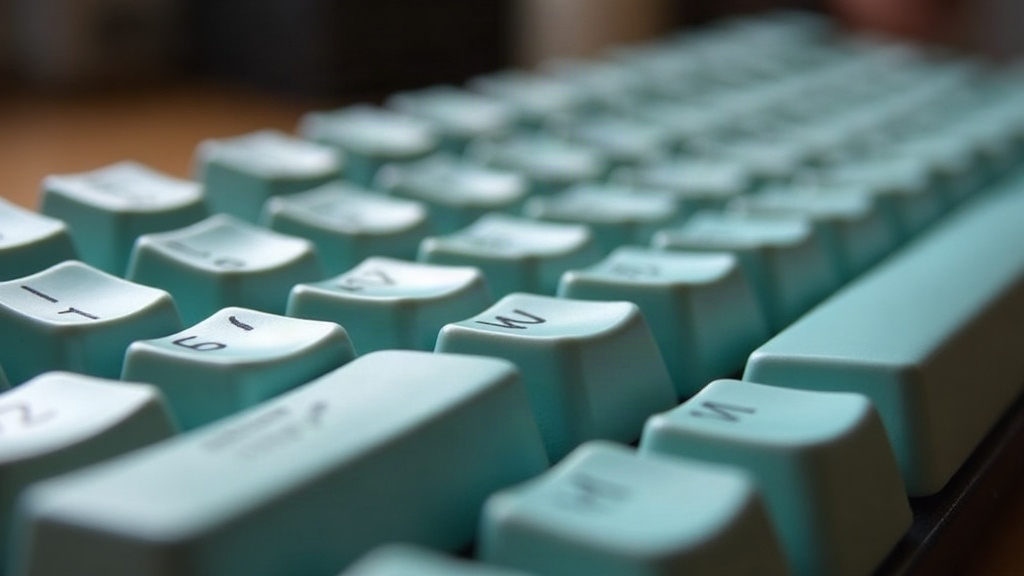
Choosing between Cerakey ceramic keycaps and POM jelly profiles really comes down to one trade-off: Cerakey gives you a denser, deeper “thock” with a cool, almost glass-like feel under the fingertip, while POM jelly leans softer and creamier, with a smooth, slightly warm texture that a lot of typists find easier to live with over long sessions. Neither one wins outright. It’s a question of whether you’re chasing acoustic depth or chasing comfort.
What Makes Each Material Unique
Cerakey Ceramic Keycaps
Cerakey keycaps are built from a ceramic-infused composite, usually blended with a resin base so they don’t end up brittle like pure ceramic would. That combination gives you a few distinct traits.
- High mass density. Ceramic composites simply weigh more than standard PBT or ABS. That extra mass dampens resonance and pulls the sound signature down into lower-pitched territory.
- Rigid surface feel. Your fingertip lands on something hard, almost glass-like, and vibration travels through it cleanly. Each keystroke gets a crisp, defined edge.
- Thermal neutrality. Ceramic starts out cool to the touch, a bit like stone or glass. Some typists genuinely look forward to that during a long, hot afternoon at the desk.
POM Jelly Profiles
POM (Polyoxymethylene) is the self-lubricating plastic you already find in a lot of switch housings. Jelly-profile keycaps take that same material and mold it into a translucent, semi-gloss shell that’s thinner and noticeably more flexible than any ceramic composite.
- Lower mass, higher flex. POM caps give slightly under each keystroke, soaking up some of the impact energy instead of bouncing it back. The result is a rounder “pok” or something closer to a clack-pok hybrid.
- Naturally smooth texture. The low-friction surface feels silky, not gritty, and unlike ABS, it won’t develop that shiny, grimy patina after a year of daily use.
- Warmer touch. POM holds onto a bit of your hand’s warmth, so it never feels as clinical as ceramic during a marathon typing session.
Acoustic Depth: Side-by-Side
| Factor | Cerakey Ceramic | POM Jelly |
|---|---|---|
| Pitch | Lower, deeper | Mid-range, rounder |
| Sustain | Longer resonance | Shorter, damped |
| Consistency across board | Very consistent (dense material) | Slightly varies with plate/case |
| Best switch pairing | Linear switches (thocky builds) | Tactile or light linear switches |
If you’ve already put together a “thock box” (gasket-mounted plate, foam dampening, lubed linears, the whole deal), Cerakey will push that bass character even further. The ceramic mass behaves almost like a lid on a resonance chamber. POM jelly works differently: it rounds off harsh high frequencies without stacking on extra low end. Think of it as the more balanced option rather than the bass-forward one.
Fingertip Feel: What Typists Actually Notice
Run a blind typing test and most people zero in on three things.
- Initial contact. Cerakey reads as harder and cooler. POM feels softer and sits at a more neutral temperature.
- Bottom-out sensation. Ceramic sends that bottom-out shock straight up through your finger (some people find this tiring after 8+ hours), whereas POM’s slight flex cushions it.
- Long-term comfort. Writers and programmers grinding through marathon sessions tend to reach for POM because it’s easier on the fingers. Gamers and acoustic hobbyists, on the other hand, gravitate toward Cerakey for that satisfying thock on every single keypress.
Which Should You Choose?
Pick Cerakey ceramic keycaps if:
- You’re after a deep, satisfying thock for recording or streaming your typing or gaming setup.
- A firmer, cooler touch doesn’t bother you.
- Your board already has sound-dampening foam and you want to push the bass depth as far as it’ll go.
Pick POM jelly profiles if:
- Comfort during long sessions matters more to you than acoustic depth.
- You like the translucent, semi-gloss look paired with a smooth, warm feel.
- You want a pleasant sound without it being overly deep or clacky.
Maintenance and Durability Notes
Cerakey caps hold up extremely well against shine and wear, thanks to their hardness. The flip side? They can be more brittle if dropped. A hairline crack isn’t out of the question if a cap falls from desk height onto tile or concrete. POM jelly caps handle impacts better; they flex instead of cracking. But the surface does show light scuffing sooner under heavy daily use, particularly on the spacebar and whatever keys you hammer most.
Conclusion
Both Cerakey ceramic and POM jelly sit at the higher end of material innovation in the custom keyboard world, but they’re solving two different problems. Cerakey is your pick when acoustic depth is the goal, a dense, resonant thock that lifts any sound-focused build. POM jelly is the pick for all-day comfort, a smooth, flexible, warmer feel that cuts down on finger fatigue without giving up a pleasant typing sound. If you can only pick one, let your main use case make the call: sound-focused builds lean Cerakey, comfort-focused daily drivers lean POM jelly.