Benefits of Sorbothane Over Neoprene for Case Modding
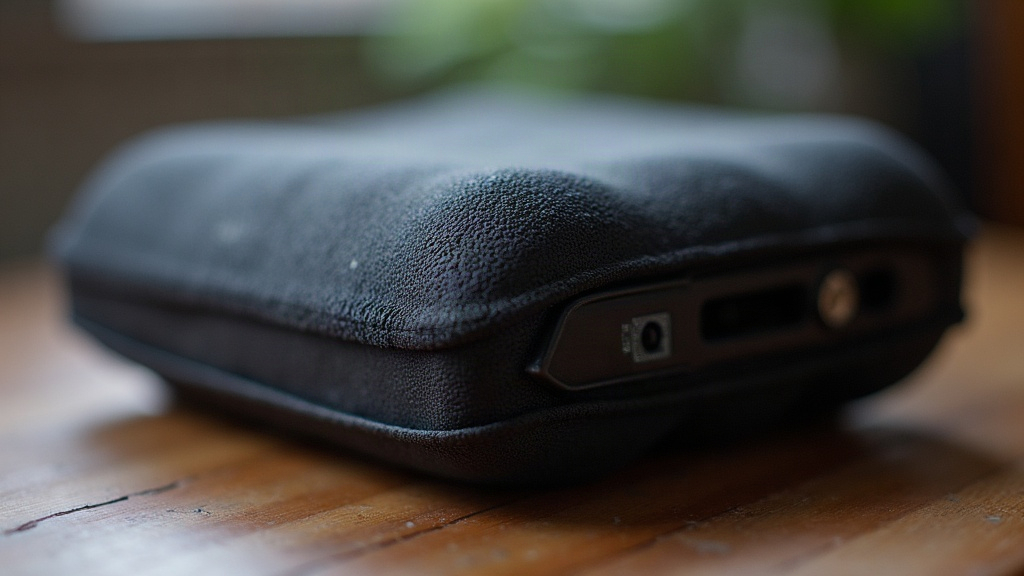
Why Sorbothane Beats Neoprene for Silent PC Builds
When you’re building a custom PC or knee-deep in a case mod project, getting the thing to run quiet matters just as much as raw benchmarks or how good it looks under RGB. For years, the go-to fix for noisy pumps, screaming fans, and rattling hard drives has been Neoprene pads and gaskets. Cheap, available at any hardware store, good enough for most builds. But there’s a material that quietly outperforms it in almost every way, and serious modders have started catching on: Sorbothane.
If you haven’t looked into swapping Neoprene for Sorbothane in your next build, you’re leaving performance on the table. Not GPU performance, obviously. Acoustic performance. Here’s why this odd, squishy polymer might be the single best upgrade you make to a silent PC build.
What Is Sorbothane, Anyway?
Sorbothane is a proprietary visco-elastic solid, originally engineered for industrial shock absorption and high-end audio isolation (think speaker feet and studio monitor stands). Under load it behaves almost like a liquid, but it snaps back to its original shape once the pressure’s gone. That combination, liquid-like energy absorption plus solid memory, is what makes it so much better at killing vibration than ordinary rubber or foam like Neoprene.
Vibration Dampening That Actually Works
The main reason to bother with Sorbothane at all is its ability to soak up constant, low-level micro-vibrations. A D5 or DDC pump running 24/7, or a 7200RPM mechanical drive spinning away in a drive cage, both generate steady mechanical motion. Transfer that straight into an aluminum or tempered-glass chassis and you get a low hum that’s nearly impossible to ignore once you notice it (and you will notice it, usually at 2am).
Neoprene cushions the blow, sure, but it’s springy. That bounce can actually send some of the vibrational energy right back into the case instead of killing it. Sorbothane doesn’t do that. It absorbs up to roughly 94.7% of shock energy and converts it into a tiny, harmless amount of heat rather than bouncing it back. Slide a small Sorbothane pad under your pump and the resonant hum in the case pretty much vanishes. Neoprene just can’t reliably pull that off.
Better Acoustic Insulation, Not Just Sound Blocking
There’s a difference between blocking sound from escaping the case and stopping the case from generating sound in the first place. A lot of modders line their side panels with foam sheets to muffle noise, and cheap Neoprene sheets work fine for that. But a few strategically placed Sorbothane feet under your drive bays or side panel mounts can stop the vibration before it ever reaches the panel.
Decouple the noisy parts from the rigid frame and the whole system’s acoustic footprint drops. This matters even more in Small Form Factor builds, where everything’s crammed into a 15-liter case and resonance problems get amplified simply because there’s nowhere for the sound to go.
It Lasts Longer, Too
Here’s the thing nobody tells you about Neoprene: it develops compression set. Leave a heavy pump, a radiator, or a PSU sitting on a Neoprene pad for a year or two and it flattens out, dries up, and hardens. Once that happens, it’s basically just a stiff spacer. Zero dampening left.
Sorbothane holds its shape and elasticity far longer under the same static load. It’ll sit under a reservoir for years without permanently flattening. Yes, it costs a bit more up front, sometimes double or triple the price per sheet, but you won’t be tearing apart a carefully bent hard-tube loop two years later just to swap out a squashed isolation pad.
Tips for Actually Using It
Ready to switch it out? A few things worth knowing before you order a sheet:
- Pay attention to the Durometer (hardness rating). Sorbothane comes in different firmness levels. For light stuff like case fans or SSD mounts, go softer, somewhere around 30-50 Duro. For heavier components like water cooling reservoirs and high-flow pumps, a firmer 70 Duro rating gives you more physical stability while still soaking up vibration.
- Put a barrier between it and your finish. Sorbothane has a naturally tacky surface, almost like it wants to grip everything it touches. Left directly on acrylic or painted metal for months, it can leave residue behind. A thin layer of plastic film or a strip of electrical tape between the pad and the surface solves this completely.
- Use less than you think you need. It’s efficient enough that you don’t need to blanket an entire panel in it. Small cut feet, thin strips, or washers under mounting points usually beat one giant continuous sheet, and they’re cheaper too.
Bottom Line
Neoprene has earned its place as the budget staple of PC building for decades, and there’s nothing wrong with using it on a tight budget. But it just doesn’t hold up against the physics of a proper visco-elastic polymer. Switching to Sorbothane gets you near-total vibration elimination, a noticeably quieter acoustic profile, and durability that will genuinely outlast the components it’s protecting. If a completely silent, zero-resonance build is the goal, Sorbothane is the material that gets you there. Neoprene just gets you close.